Book a free first hour
Free first hour (SAT and ACT)
Draft, sample content

The ACT is a clock.
We make it yours.

Most ACT students know the material and still lose six points to the clock. The program rebuilds how you move through each section, drills it until it's automatic, and treats Science as the data-reading test it is.

First hour free, then $180 an hour. Full 14-week program $4,032.

Taught by Rick, founder, 99th percentile. One tutor in every session.

Where our students have goneSample
PrincetonMITHarvardStanfordYaleCaltechDukeJohns HopkinsNorthwesternPennCornellUChicagoBrownColumbiaDartmouthUCLAUC BerkeleyRiceNotre DameVanderbilt
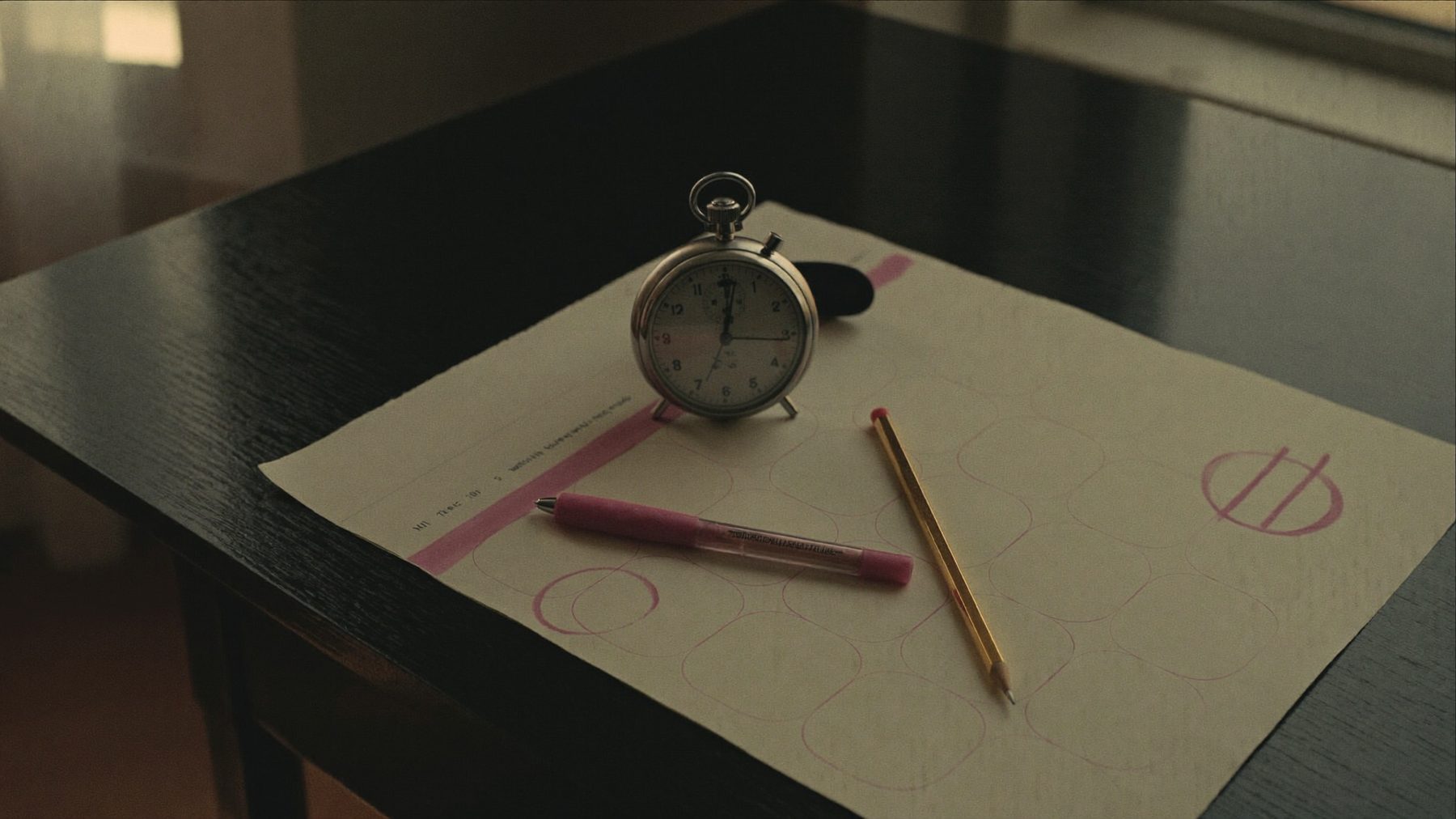
Still life for the ACT program.

What the ACT rewards.

To recordRick with a printed Reading section and a timer: the passage-order decision, the skip rule, and what 52 seconds a question looks like in practice. 60 to 90 seconds.

Pace

The ACT gives you less time per question than any other major test. Top scorers don't rush. They run a fixed routine per section, so no question gets more than its share of the clock.

Rules, not instincts

ACT English tests a small set of grammar and rhetoric rules over and over. Students who know the eight punctuation rules cold gain three to five English points with no reading improvement at all.

Science without science

The Science section is a graph-and-table-reading test with a few conflicting-viewpoints passages. Most points require zero chemistry. Students who stop trying to understand the experiment and start reading the figures jump fast.

The ACT, section by section.

SectionQuestions and timeWhat it testsWhere points leak
English50 q, 35 minPunctuation, grammar, sentence structure, rhetoric and organizationComma and semicolon rules, redundancy, choosing DELETE
Math45 q, 50 minPre-algebra through trig, with word problems and modelingTime on the last 10, geometry formulas, reading what the question asks
Reading36 q, 40 minFour passages: literary narrative, social science, humanities, natural scienceRunning out of time, rereading, inference questions
Science (optional)40 q, 40 minReading data from graphs and tables, comparing viewpointsReading the passage text instead of the figures

Format from act.org. Pink marks where students most often lose points.

Where ACT points go.

Your diagnostic shows which of these are yours. Usually two.

  1. 1

    No pacing system

    Students spend 90 seconds on question 7 and have 20 seconds for question 40. A fixed per-section routine, drilled until automatic, is the single biggest score lever on the ACT.

  2. 2

    Reading the Science text

    The passage paragraphs are mostly a distraction. The questions point at specific figures. Students who go figure-first finish Science with time to spare.

  3. 3

    Grammar by ear

    ACT English rewards knowing the rule. "Sounds right" fails on exactly the questions written to sound right, and English is the fastest section to raise.

  4. 4

    Ignoring the easy Math points

    The first 30 Math questions are the ones you know. Careless errors there cost more than the hard questions at the end you never reached.

What a ACT program looks like.

Week 0 to 1

First hour and diagnostic

The free first hour, then a full-length proctored ACT with a timing log per section, so we see exactly where the clock beats you.

Weeks 2 to 5

Rules and routines

English rules as a checklist. Math content gaps closed. A pacing routine for each section, drilled on short timed sets.

Weeks 6 to 9

Full-section speed

Weekly proctored tests. Science figure-first method. Reading passage order and skip strategy locked in.

Weeks 10 to 14

Composite tuning

Decide where the last points are cheapest. Two dress rehearsals. Test-week protocol.

Who teaches it.

Rick [Last name], founder. I scored in the 99th percentile on the tests I teach, and I am the person in every session. There is no roster and no "whoever is free." The tutor who reads your diagnostic is the tutor at the whiteboard in week fourteen.

ACT score[Rick: official score, year]
FormatOnline with a shared whiteboard, or in person in Austin

More about Rick

What ACT tutoring costs.

One rate. Commit to ten sessions and it drops 10%. Commit to the full program and it drops 20%.

ACTFirst hour free
The full 14-week program28 sessions, two a week$4,032$144 an hour, you save $1,008
Ten sessionsprepaid$1,620$162 an hour
One sessionno commitment$180an hour
Group sessionssmall online groups with Rick, waitlist. First session Monday, February 1, 2027, 8 PM Central.$45an hourJoin the group waitlist
  • One tutor, 99th percentile on the ACT, in every session
  • The pattern report: your leaks, your target in writing, your week-by-week plan
  • Two private sessions a week
  • A proctored full-length test every week, reviewed question by question
  • A written test-week protocol and a score-day debrief call
  • The written promise, at right
Book a free first hourNo card. Bring the most recent score report.

One ACT student, start to finish.

Sample case
ACT score reportJunior, Round Rock
Diagnostic27
Official, after 10 weeks34
Scale1 to 36
27 → 3410 wks

Ethan, ACT

The pattern. Ran out of time on every section. Reading finished with eight questions blank. Science dragged the composite down even though he was an A student in chemistry.

The fix. A per-section pacing routine drilled until automatic, Science treated as a data-reading test, English grammar as a short checklist.

“Once I stopped trying to understand the science and just read the graphs, it was a free 10 points.”

ACT students, in their words.Sample quotes

My son is a strong student who ran out of time on every section. Pacing drills, one tutor, and his Science went up eleven points without opening a science book.

Megan T.Parent, Round Rock

He could explain exactly why each wrong answer was wrong, not just which one was right. That's the difference.

Alex W.Student, class of 2027
Sample text
Megan T.Mom, Round Rock
Yesterday 7:15 AM
Ok I have to tell someone. 34 composite.
He was a 27 in August.
That's the pacing work. Incredible.
Science 35. He didn't open a science book once 😂
Score-day texts, shared with permission. A real screenshot replaces this.

ACT questions.

What happens in the free first hour?

Rick reads the student's most recent score report or practice test with them, or runs a short timed set of each section. By the end you know where the clock is beating them and what a realistic composite is. No card, no obligation.

Should we take Science now that it's optional?

Usually yes if the student is applying to STEM programs or to schools that still ask for it, and almost always yes if a strong Science score helps the superscore picture. We decide after the first hour.

SAT or ACT?

If you're undecided, we'll run a short diagnostic of each. Students who are steady and fast, and who prefer straightforward questions, tend to score higher on the ACT. Colleges accept both equally.

Do you use real ACT tests?

Yes. Official released ACTs and the current ACT practice material, under proctored conditions.

Online or in person?

Both. Online on a shared whiteboard, or in person in Austin at [Rick: location]. Sessions run [Rick: days and hours].

Do you run group sessions?

Starting soon. Small online groups with Rick at $45 an hour. The first group session is Monday, February 1, 2027, at 8 PM Central. Waitlist only until then; pick the group option in the form below.

Book the free first ACT hour.

One hour with Rick, no card, no obligation. Bring the most recent score report or practice test. You leave knowing the question types costing the most points and what a realistic target is.

To recordRick to camera: when he replies, how the first hour or the diagnostic runs, what to bring. Same desk and light as the other videos.
Free first hour, ACT
Format
Test date

Rick replies by text or email within one business day. No mailing list.